Young Ju, Ph.D.
Fructose consumption has increased considerably over the past five decades. The increasing consumption of fructose, primarily from added sugar and sweetened beverages, has increased the incidence of metabolic diseases such as type 2 diabetes mellitus, hypertension, fatty liver disease, and dyslipidemia worldwide. It’s estimated that over 10% of Americans’ daily calories are from fructose (about 49-55 g/day with only about 8 g of that from natural sources) (1, 2). The American Heart Association recommends no more than 25 g of added sugar/day for women, and 36 g for men (3).
Sugar, Glucose, and Fructose
Sugar (sucrose) is a disaccharide composed of 50% glucose and 50% fructose (Figure 1). Glucose is a monosaccharide (a simple sugar) and is the building block of carbohydrates. Fructose is also a monosaccharide and is found naturally in fruits, vegetables, and honey.
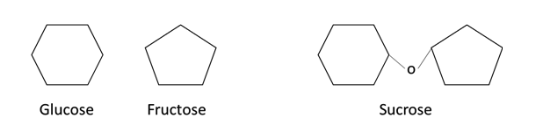
Figure 1. Glucose, fructose, and sucrose
High fructose corn syrup (HFCS) is produced during the refining process of corn starch. Corn syrup is 100% glucose and primarily used in baking, while HFCS is modified to contain high levels of fructose (~42%-55%), making it a much sweeter, more chemically stable, and cheaper sweetener for processed foods and beverages.
Fructose is metabolized primarily in the liver, while sucrose (sugar) is broken down in the small intestine into glucose and fructose. Although fructose has a sweeter taste than glucose and sugar, it has less impact on blood glucose levels than glucose and sugar. So even though fructose does not elevate blood glucose directly, it’s metabolized faster than glucose. When excessive amounts of fructose are consumed, this faster metabolism of fructose causes oxidative stress, reduces insulin sensitivity, and likely drives lipid synthesis leading to insulin resistance, fatty liver and other metabolic stress.
Added Fructose Intake Impacts on Health Conditions
Chronic high-fructose intake is directly linked to these metabolic disorders (4, 5, 6).
Obesity (7): High fructose consumption drives obesity primarily through the liver, which rapidly converts excess fructose to fat (triglycerides).
Liver disease and fatty liver (Metabolic Dysfunction-Associated Steatotic Liver Disease) (8): Excessive fat buildup in the liver could promote inflammation.
Type 2 diabetes and insulin resistance (9): Excessive fat deposits in liver cells block normal insulin signaling, reducing the body’s ability to respond to insulin.
Cardiovascular disease (1, 10): Higher fructose consumption increases cardiovascular risk. A diet containing 20 g/day was associated with higher levels of inflammatory markers, higher levels of triglycerides and lower HDL-cholesterol (‘good’ cholesterol).
Gut dysbiosis (alterations in the gut microbiota) (11): Excessive fructose could damage intestinal lining barrier allowing bacterial toxins to enter the blood stream, causing inflammation, and altering gut microbiota (microorganisms living in the gut).
Hyperuricemia (high levels of uric acid in blood) and gout (12, 13): The breakdown of fructose generates uric acid, which could induce oxidative stress and cellular damage within the liver.
Cancers (14, 15): High fructose consumption is linked to increased risk of colorectal, pancreatic, and breast cancer. Excess fructose can indirectly help tumors to grow.
Natural Sources of Fructose(16)
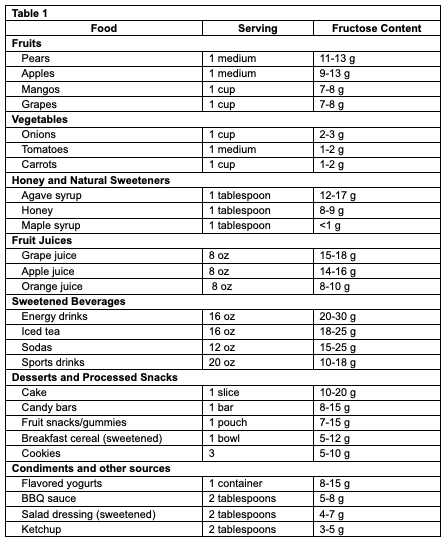
Fructose from whole fruit is generally healthy. Intake of whole fruits and vegetables slows absorption, improves fullness, and reduces rapid simple sugar exposure. Many natural foods and processed foods contain fructose (Table 1).
Summary
Small or moderate fructose intake is usually not a problem in healthy individuals. The major concern is excessive intake of added fructose from sweetened beverages and processed foods. Natural sweeteners (e.g., honey, agave syrup, cane sugar, and coconut sugar) are still sugars. Consumers often assume that natural sweeteners are healthier than refined sugars; however, these sweeteners can contain very high fructose levels. Chronic high intake (50-100 g/day) of fructose from added fructose could lead to the serious health conditions mentioned above. In general,
Choose naturally occurring sources of fructose in moderation.
Limit/avoid sweetened beverages.
Reduce processed foods.
Read nutrition labels for added sugars.
Maintain overall dietary balance of foods.

Dr. Young Ju is a Ph.D and Associate Professor of Human Nutrition, Foods, and Exercise at Virginia Tech.
References
Li et al. “Fructose consumption from different food sources and cardiometabolic biomarkers: crosse-sectional associations in US men and women.” Am J Clin Nutr. 2023, 117(3):490.
Laughlin. “Normal roles for dietary fructose in carbohydrate metabolism.” Nutrients. 2014, 6:3117.
American Heart Association. “Added sugars.” https://www.heart.org/en/healthy-living/healthy-eating/eat-smart/sugar/added-sugars
Baharuddin. “The metabolic and molecular mechanisms linking fructose consumption to lipogenesis and metabolic disorders.” Clin Nut ESPEN. 2025, 69:63.
Li et al. “Fructose metabolism and its roles in metabolic diseases, inflammatory diseases, and cancer.” Mol Biomed. 2025, 6(1):43.
Sindhunata et al. “Dietary fructose as a metabolic risk factor.” Am J Physiol Cell Physiol. 2022, 323(3):C847.
Tappy. “Fructose-containing caloric sweeteners as a cause of obesity and metabolic disorders.” J Exp Biol. 2018, 221(Pt Suppl 1):jeb164202.
Geidl-Flueck and Gerber. “Fructose drives de novo lipogenesis affecting metabolic health.” J Endocrinol. 2023, 257(2):e220270.
Softic et al. “Fructose and hepatic insulin resistance.” Crit Rev Clin Lab Sci. 2020 57(5):308.
Janzi et al. “Added sugar intake and its associations with incidence of seven different cardiovascular diseases in 69,705 Swedish men and women.” Frontiers in Public Health 2024, 12:1452085.
Hsu et al. “The impact of gut microbiome on maternal fructose intake-induced developmental programming of adult disease.” Nutrients. 2022, 14(5):1031.
Lubawy and Formanowicz. “High-fructose diet-induced hyperuricemia accompanying metabolic syndrome-Mechanisms and dietary therapy proposal.” Int J Environ Res Public Health. 2023, 20(4):3596.
Clebak et al. “Gout: Rapid evidence Review.” Am Fam Physician. 2020, 102(9):533.
Krause and Wegner. “Fructose metabolism in cancer.” Cells. 2020, 9(12):2635.
Aoyagi et al. “High-fructose corn syrup on inflammation and cancer.” World J Oncol. 2025, 16(6):531.
U.S. Department of Agriculture. FoodData Central. https://fdc.nal.usda.gov/
People with any health problems should talk to their healthcare providers. This information is provided for your reference, and you use at your own risk; you should rely on your medical professional for medical advice.